
Choosing the right Photochromic Polarized Sunglasses requires more than matching a frame to your face. Lens behavior matters outdoors, inside vehicles, and during sudden weather changes.
The Vision Council’s 2024 Consumer Insights report shows that sunglasses remain a regular purchase for protection, comfort, and style. Grand View Research also identifies rising demand for performance eyewear, supported by outdoor recreation and greater awareness of ultraviolet exposure. These trends sound convincing. Still, market growth does not guarantee every lens performs equally.
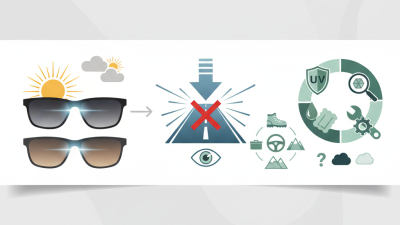
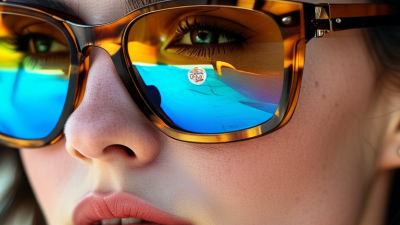
Optometrist Dr. Gary Heiting explains, “Polarized lenses reduce glare from reflective surfaces.” That detail matters near wet roads, snow, water, and bright glass. Photochromic technology adds another layer by darkening in ultraviolet light. However, many car windshields filter UV, so some lenses may change less inside vehicles. Temperature can also affect activation speed. Small differences become obvious at a mountain trail.
This guide presents seven practical tips for evaluating Photochromic Polarized Sunglasses. Check the lens category, UV protection claim, polarization quality, activation range, and return policy. Examine hinge strength and nose-pad comfort, too. A dark lens is not automatically a safer lens. That assumption deserves reconsideration.
Look for transparent testing information from established manufacturers, opticians, or recognized eye-care organizations. The American Academy of Ophthalmology recommends sunglasses that block 99% to 100% of UVA and UVB radiation. Reliable protection should be clearly documented, not implied by marketing language.
The best choice may not be the most expensive one. It should match your actual light conditions, driving habits, prescription needs, and daily comfort. Expect trade-offs. Better decisions begin with realistic expectations.
7 Tips for Choosing Photochromic Polarized Sunglasses
Start with UV400 Protection and 100% UVA/UVB Blocking
Tip 1: Check the lens information before judging its appearance. UV400 means the lenses are designed to block ultraviolet wavelengths up to 400 nanometers. Look for clear wording that confirms 100% UVA and UVB protection. Dark lenses alone are not proof of safety. A gray tint can look convincing while offering limited protection.
Tip 2: Remember that polarization and UV protection do different jobs. Polarized lenses reduce reflected glare from wet roads, windows, and water. UV protection shields your eyes from invisible ultraviolet radiation. You need both features. I once assumed darker lenses were automatically safer, but that was a poor shortcut.
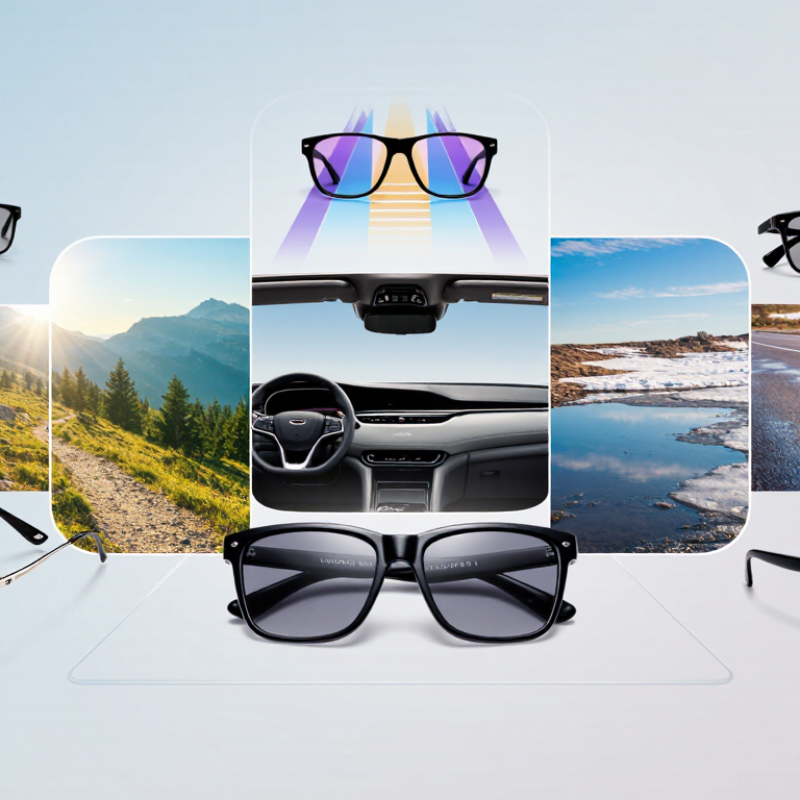
Tip 3: Test photochromic performance in realistic settings. Step outside and observe how quickly the lenses change. Temperature can affect their response. Cold conditions may produce different results from warm afternoons. Most photochromic lenses also change less inside vehicles because windshields filter much ultraviolet light. This detail is easy to miss.
Tip 4: Inspect the frame fit carefully. Lenses should cover your eyes without leaving large gaps near the cheeks. A secure fit reduces stray light and improves comfort during cycling or hiking. However, no frame shape replaces certified UV protection. Ask for test documentation when product claims seem vague. Reliable information matters more than fashionable color.
| Tip | Selection Dimension | Recommended Specification | What to Check | Why It Matters |
|---|---|---|---|---|
| 1 | UV protection | UV400 / 100% UVA & UVB | Look for a clear UV400 or 100% UVA/UVB protection statement on the product label or technical documentation. | UV400 indicates protection against ultraviolet wavelengths up to 400 nanometres, covering UVA wavelengths from approximately 315–400 nm and UVB wavelengths from approximately 280–315 nm. |
| 2 | Polarization performance | High-quality polarized lenses with a stated glare-reduction specification | Confirm that the lenses are polarized rather than merely tinted. Test them against a reflective surface or an LCD screen if permitted. | Polarization reduces horizontally reflected glare from roads, water, snow, and other bright surfaces. Polarization alone does not guarantee UV protection. |
| 3 | Photochromic activation | Consistent darkening outdoors and reliable clearing indoors | Check the stated activation conditions, transition time, and whether the lenses are designed for the intended climate and daily use. | Photochromic lenses change tint in response to ultraviolet exposure. Their speed and darkness can vary with temperature, UV intensity, lens material, and vehicle windshields. |
| 4 | Visible light transmission | Choose a tint level suited to the main activity and environment | Review the lens category or visible light transmission information. Avoid selecting a tint solely by its appearance in indoor lighting. | A darker lens is not automatically safer. Appropriate visible light transmission helps balance visual comfort, contrast, and usable brightness. |
| 5 | Optical clarity | Distortion-free vision across the central viewing area | Hold the glasses at arm’s length and view straight lines through the lenses. Move the glasses slowly and check for bending, waviness, or blur. | Good optical quality supports comfortable vision and reduces visual fatigue, especially during driving, cycling, hiking, or other extended outdoor activities. |
| 6 | Fit and coverage | Secure, comfortable fit with limited side and top light gaps | Check bridge comfort, temple pressure, nose-pad stability, frame movement, and coverage around the eyes. The frame should not obstruct peripheral vision. | A stable, well-fitting frame helps maintain consistent lens positioning and limits direct sunlight, wind, dust, and stray glare from entering around the lenses. |
| 7 | Durability and care | Scratch-resistant surface with a protective case and cleaning cloth | Review lens and frame materials, hinge construction, care instructions, and resistance to common outdoor wear. Store the glasses in a hard case. | Scratches and improper cleaning can reduce visual clarity. A case and suitable lens cloth help preserve the surface and extend the useful life of the sunglasses. |
| Practical note: UV protection, polarization, and photochromic performance are separate lens features. Confirm each one independently rather than assuming that a dark tint provides complete ultraviolet protection. | ||||

Choosing photochromic polarized sunglasses requires more than checking how dark the lenses become. Compare polarization efficiency, glare reduction, and compliance with ANSI Z80.3 guidance.
Tip: Test glare outdoors. Reflections from wet roads, windows, and water should look noticeably weaker. Rotate the lenses against an LCD screen, but remember this quick test can mislead.
Tip: Ask for polarization data. A higher extinction ratio usually means better rejection of reflected, horizontally oriented light. However, “polarized” alone does not reveal lens quality.
Tip: Check the lens through different angles. Poor optical quality may create waviness, doubled edges, or eye strain. I have found that a lens can reduce glare yet still feel uncomfortable after an hour.
Photochromic performance deserves separate attention. Tip: Compare activation and fading times in realistic conditions, not only in a showroom. A lens may darken quickly in direct sunlight but change slowly inside a vehicle.
Tip: Consider temperature. Some photochromic materials respond differently in cold weather.
Tip: Inspect the darkest and lightest states. The lens should remain usable when brightness changes suddenly.
Tip: Look for clear information about ANSI Z80.3 testing. This voluntary standard addresses areas such as optical quality, ultraviolet transmittance, and impact resistance for nonprescription eyewear. It does not automatically prove excellent polarization efficiency or maximum glare reduction.
Tip: Request test documentation rather than trusting a printed claim. Standards can be misunderstood, and labels are not laboratory reports.
Tip: Check fit and coverage. Side gaps can let intense light enter, even with effective polarization. A final outdoor trial is wise, though it is not a substitute for professional testing.
Choosing photochromic polarized sunglasses starts with visible-light transmission, or VLT. A lens rated from 20% to 85% VLT should adapt noticeably, not merely change shade. At 85%, it appears nearly clear indoors. At 20%, it offers stronger brightness control outdoors. The change should look even across both lenses.
Check the technical sheet, not just the product description. Ask whether the stated VLT range was measured at standard temperature and sunlight intensity. The CIE 203:2012 report explains that solar ultraviolet exposure varies with altitude, season, latitude, and cloud cover. Activation can therefore feel slower on a cool, cloudy mountain road. That detail is easy to miss.
Polarization reduces reflected glare, but it does not automatically prove complete UV protection. ISO 12312-1 classifies sunglass filters by luminous transmittance and requires performance testing for general-use eyewear. Look for documented UV400 or equivalent test evidence from an independent laboratory. Also compare activation and fading times. A lens that darkens quickly but fades slowly may feel inconvenient when entering a shop. Try viewing a bright window, wet pavement, and a digital dashboard before buying. I have found that comfort matters more than dramatic darkness. My own judgment is imperfect. Temperature and personal sensitivity can change the experience. A wider frame, accurate fit, and stable polarization often matter as much as the advertised 20% to 85% range.
Evaluate photochromic activation across a visible-light transmission range of 20% to 85%.
Higher visible-light transmission is suited to indoor or low-light conditions, while lower transmission provides stronger brightness reduction in intense sunlight. The values shown are practical evaluation targets; actual activation depends on UV exposure, temperature, lens material, and activation time.
7 Tips for Choosing Photochromic Polarized Sunglasses
Photochromic polarized sunglasses can feel different across changing light. Their lens category may shift from Category 2 toward Category 3 outdoors, depending on temperature and exposure. Under ISO 12312-1, Category 2 suits moderate sunlight, while Category 3 is intended for bright sunlight. Category 4 offers very strong reduction and should not be used for driving. Always check the product markings and care instructions. Tip: Test the lenses outside before relying on them for a long journey.
Look for clear information about UV protection, polarization, and the lens category range. Polarization reduces reflected glare from water, roads, and glass, but it does not replace UV protection. A reliable lens should provide stated UVA and UVB protection and meet the relevant standard. Photochromic lenses may darken more slowly in cold weather or behind a vehicle windscreen. That detail is easy to miss. Tip: Compare the lens response near a sunny window, then outdoors, without assuming instant darkening.
Fit also affects real-world protection. The frame should sit close enough to limit light entering from the sides, while remaining comfortable over your ears. I once chose lenses for their dark appearance and ignored their markings; that was not a careful decision. Category 3 may work well for open, bright conditions, but Category 2 can be more practical during mixed cloud and sun. Tip: Match the category to your actual route, not the darkest possible tint.
Choosing photochromic polarized sunglasses requires more than liking the frame shape. Fit matters during real movement. The temples should sit firmly without pressing your head. The nose pads should stay comfortable after an hour outdoors. Bend forward slightly. If the frame slips, the fit needs reconsideration. Optical clarity deserves close inspection. Look at straight window frames or railings. They should remain straight, not wavy. Check the lens center, edges, and surface for uneven tint. Clear vision is essential.
Polarization should reduce reflected glare from water, glass, and wet pavement. Test the lenses near a bright window, but do not stare at the sun. Photochromic lenses should change gradually when light conditions shift. Their darkest shade may not appear instantly inside a car. That is normal for many designs, but it can be inconvenient. Read the technical details carefully. My own preference is a balanced transition, not the fastest transition advertised.
Durability also affects long-term value. Examine hinge movement, frame flexibility, and lens coating quality. A sturdy frame should survive a crowded backpack, though careless storage still causes scratches. Try a seven-day outdoor routine: walking on a bright afternoon, cycling under clouds, commuting at dawn, and spending time near reflective water. Notice pressure points, glare, color changes, and cleaning difficulty. One overlooked detail can matter. Keep a small record. After seven days, comfort and consistent vision often reveal more than a mirror check.