
Choosing Uv Ray Sunglasses is a health decision as well as a product decision. Buyers comparing suppliers should look beyond lens color, frame style, and price. The World Health Organization’s guidance on ultraviolet radiation identifies eye damage, including cataracts, as a significant health concern. The U.S. National Eye Institute advises choosing sunglasses that block 99–100% of UVA and UVB rays. Those figures give buyers a clear starting point: request test documentation, not just a “UV400” label.
Market demand adds pressure to make careful choices. Grand View Research estimated the global sunglasses market at USD 31.5 billion in 2023, with further growth projected through 2030. A growing market can mean more options, but also more variation in quality claims. As optometrist Dr. Susan Blakeney has noted, “UV protection is important whatever the weather.” Buyers should still verify the precise wording and evidence behind every supplier’s protection claim; a quotation or label alone is not proof of performance.
For global purchasing teams, the details matter. Ask whether lenses were tested for UVA and UVB transmission, check that reports identify the tested model, and confirm whether polarized lenses also provide UV protection. A dark lens is not necessarily a protective lens. Nor does a polished sample guarantee consistent production. Small checks can prevent costly surprises. This guide examines the evidence buyers can request, the specifications worth comparing, and the questions to ask before placing an order. Not every supplier will provide perfect documentation; that deserves scrutiny, not guesswork.
How to Choose UV Ray Sunglasses for Global Buyers?
UV radiation reaches the eyes even on cool or cloudy days. UVA can pass deeply into eye tissues, while UVB causes surface irritation and sunburn. Long exposure may increase the risk of cataracts and other eye problems. Sunglasses should block 99–100% of UVA and UVB, or provide protection up to 400 nanometers. The label matters. Dark lenses alone do not prove safety. In fact, very dark lenses without UV filtering may allow harmful rays to enter wider pupils. That detail is often missed.
Fit also changes protection. Wraparound frames reduce sunlight entering from the sides. Close-fitting lenses work better at beaches, snowy roads, and high altitudes. Polarized lenses can reduce glare, but polarization does not automatically mean UV protection. Global buyers should check testing information and local compliance markings, because requirements differ between markets. Lens categories also matter. Very dark lenses may be unsuitable for driving, especially at night. I have found that shoppers often choose color before checking filtration. That habit needs reconsideration.
A reliable product should include clear care instructions, material details, and traceable test results. Polycarbonate lenses can offer impact resistance, but scratches still weaken visual clarity. Store sunglasses in a hard case. Clean them with water and a soft cloth. Small habits help. I still think fit is underestimated, particularly for children and narrow faces. A technically excellent lens can fail when gaps expose the eyes to side light.
| Selection dimension | Verified facts | What buyers should look for |
|---|---|---|
| UVA radiation | UVA spans approximately 315–400 nm and reaches the Earth’s surface. | Choose sunglasses with a clearly stated UV-protection specification that covers UVA through 400 nm. |
| UVB radiation | UVB spans approximately 280–315 nm. Much is absorbed by the atmosphere, but some reaches the surface. | Check that the product specification covers both UVA and UVB, rather than relying on lens darkness. |
| UVC radiation | UVC spans approximately 100–280 nm and is absorbed by the atmosphere under ordinary natural conditions. | For everyday outdoor use, prioritize documented UVA and UVB protection. |
| UV400 claim | UV400 generally indicates protection against ultraviolet wavelengths up to 400 nm; exact performance should be supported by product testing. | Request test documentation or a conformity declaration for the destination market. Do not treat the wording alone as proof of performance. |
| Lens darkness and color | Tint affects visible light transmission, not necessarily ultraviolet protection. | Do not use lens darkness or color as a substitute for a verified UV-protection specification. |
| Polarization | Polarization reduces glare from reflective surfaces; it does not by itself establish UV protection. | Treat polarization and UV protection as separate product features, and verify both when needed. |
| Lens category (visible light) | Under the ISO 12312-1 classification, filter categories indicate visible light transmission: Category 0, 80–100%; Category 1, 43–80%; Category 2, 18–43%; Category 3, 8–18%; Category 4, 3–8%. | Select a category for expected brightness and use. Category 4 is very dark and is not suitable for driving. |
| Fit and coverage | Light can enter around the lenses, so frame shape and fit affect practical coverage. | Consider close-fitting frames, larger lenses, or wraparound styles for outdoor activities and high-glare environments. |
| Global compliance | Sunglass requirements and accepted conformity markings vary by destination market. ISO 12312-1 is an international standard for general-purpose sunglasses and related eyewear. | Confirm the applicable local requirements, test reports, labels, and user information before importing or selling. |
| Use conditions | UV exposure can occur outdoors in varied conditions; reflective surfaces such as water, snow, and sand can increase glare. | Match lens category and coverage to the activity, while choosing verified UV protection for everyday outdoor wear. |
How to Choose UV Ray Sunglasses for Global Buyers?
Identifying UV Protection Labels and Regional Standards
A dark lens does not guarantee strong ultraviolet protection. Look for a clear UV400 or 100% UVA/UVB claim, then check whether supporting test documents are available. UV400 generally means protection against ultraviolet wavelengths up to 400 nanometres. It does not, by itself, show who tested the glasses or how they were tested. Ask suppliers for reports that identify the exact model and lens type. Small details matter: a report for a similar-looking frame may not cover the pair you are buying.
Regional markings can help, but they are not interchangeable. In Europe, sunglasses are commonly assessed under EN ISO 12312-1, while Australia and New Zealand use AS/NZS 1067.1. In the United States, buyers may encounter references to ANSI Z80.3. Confirm which standard and edition apply to the destination market, and verify current requirements with a qualified compliance specialist. Also check the lens category: it describes visible light transmission, not UV protection. Category 4 lenses, for example, are unsuitable for driving. Labels can be confusing. I would not rely on packaging alone; compare it with the test report, supplier documentation, and the product’s intended use.
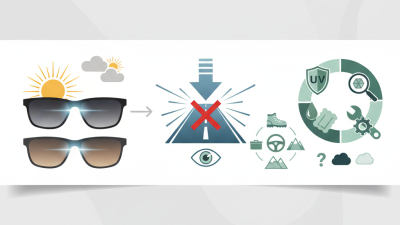
UV spectrum ranges and the wavelength coverage indicated by a UV400 claim
What to look for: UVA spans 315–400 nm and UVB spans 280–315 nm. A UV400 claim indicates protection against ultraviolet radiation up to 400 nm; check that the claim is supported by product documentation. Regional requirements differ: relevant standards include ANSI Z80.3 in the United States, EN ISO 12312-1 in Europe, and AS/NZS 1067.1 in Australia and New Zealand. Confirm the applicable standard and market-specific labeling before purchasing.
Choosing UV sunglasses starts with the lens, not the frame. The World Health Organization reports that ultraviolet exposure may contribute to up to 20% of cataract cases. Look for verified UV400 protection, which blocks ultraviolet wavelengths up to 400 nanometres. Dark lenses alone are not reliable. They can reduce brightness while allowing harmful UV through.
Lens materials also change daily performance. Polycarbonate lenses are lightweight and impact-resistant, making them practical for cycling, travel, and active work. CR-39 lenses usually offer clearer optics and lower cost, but they are less resistant to impact. Trivex lenses combine light weight with strong optical quality, although availability differs by market.
Polarized lenses reduce reflected glare from water, roads, and glass. They do not automatically provide UV protection. The International Organization for Standardization’s ISO 12312-1 addresses general-purpose sunglasses, but buyers should still check test markings and local conformity requirements.
Wraparound coverage can limit side-entry light. Poorly fitted frames may leave visible gaps.
Tips: Check UV400 evidence, lens category, and optical clarity before colour. A grey lens often preserves natural colour better than extreme tinting. For driving, avoid lenses that make dashboard displays difficult to read.
Photochromic lenses are convenient, but their performance may weaken inside vehicles. I once chose a very dark pair for beach travel and found details harder to see. That was a useful mistake. Comfort, coverage, and verified testing matter more than appearance.
UV protection matters, but frame fit often decides whether buyers wear sunglasses consistently. A frame can look excellent online and still pinch after twenty minutes. Measure lens width, bridge width, and temple length before ordering. The bridge should sit securely without leaving red marks. Temples should touch gently, not squeeze behind the ears. A measurement chart helps, but it is not perfect.
Comfort depends on weight, balance, and surface contact. Lightweight frames reduce pressure during long commutes or outdoor work. Adjustable nose pads can improve stability on narrow bridges, while wider contact points may suit broader faces. Check hinge movement and edge finishing carefully. Small rough areas become irritating quickly. Try the frame with normal head movement. It should not slide when looking down.
Intended use changes the right frame design. Wraparound shapes offer better side coverage for bright beaches, cycling, and snow. Ventilation becomes important during exercise, or lenses may fog. For driving, choose a stable frame that does not obstruct peripheral vision. For daily city use, moderate coverage may feel more practical. Ask suppliers for documented UV transmission testing and clear lens-category details. I sometimes overvalue appearance when comparing samples; comfort during real use deserves more attention.
A convincing “UV400” label is only a starting point. Buyers should request a laboratory report showing lens transmittance up to 400 nanometers. The report should identify the sample, test method, date, and laboratory. ISO 12312-1 provides a useful benchmark for general-purpose sunglasses. However, a certificate does not automatically prove every production batch is identical. That gap deserves attention.
The World Health Organization reports that up to 20% of cataract cases may relate to ultraviolet exposure. Its Global Solar UV Index guidance recommends protection when the index reaches 3 or higher. These figures make lens performance a health-related quality issue, not merely a fashion detail. Ask suppliers for independent UV testing, optical-power results, impact testing, and material declarations. Check whether the report matches the exact frame and lens combination.
Supplier compliance also needs practical verification. Review factory quality procedures, calibration records, batch coding, and corrective-action history. Order random samples from real production, not only polished approval samples. I have found that small differences in tint, hinge tension, or lens alignment can reveal weak process control. Sometimes the paperwork looks better than the product. That is uncomfortable, but useful. Buyers should record findings, repeat testing periodically, and avoid relying on a single unverified claim. WHO and ISO guidance support the process, yet local import requirements may still differ.