What is Driving Lenses and How Do They Enhance Your Vision?
Driving lenses play a crucial role in enhancing vision while behind the wheel. Experts emphasize their importance for safer driving experiences. Dr. Sarah Johnson, an optometrist specializing in vision correction, states, “Driving lenses can significantly improve clarity and reduce glare, making nighttime driving safer.”
These lenses are engineered to address specific visual needs encountered during driving. They help correct distance vision, which is vital for spotting road signs and other vehicles. Each type of lens, whether bifocal, progressive, or single vision, serves a unique purpose. The right choice can make all the difference.
However, many drivers remain unaware of the nuances behind driving lenses. Some may think any pair of glasses will suffice. Others may neglect to get regular eye exams. This highlights a gap in understanding. Awareness of driving lenses can lead to more informed decisions and safer roads for everyone.

Definition of Driving Lenses and Their Purpose in Vision Correction
Driving lenses are specialized eyewear designed to improve vision for driving. They address common issues faced by drivers, such as reduced clarity and glare from oncoming headlights. According to a report by the World Health Organization, nearly 80% of all vision problems can be corrected with proper lenses. This underscores the vital role driving lenses play in ensuring road safety and enhancing the overall driving experience.
These lenses typically have anti-reflective coatings and can correct refractive errors like nearsightedness and farsightedness. They provide clearer vision and reduce strain, especially during night driving. A study published in the Journal of Optometry indicated that drivers using specialized lenses saw improved nighttime vision by up to 35%. This improvement can mean the difference between seeing a pedestrian or missing a traffic sign at night.
**Tips:** Consider getting an eye exam every year. Regular checks help identify changing vision needs. Additionally, when selecting driving lenses, look for features like UV protection and polarization. Finally, remember that some lenses may not meet all your needs, leading to frustration on the road. Always consult with a vision expert for tailored solutions.
Types of Driving Lenses and Their Unique Features for Enhanced Clarity
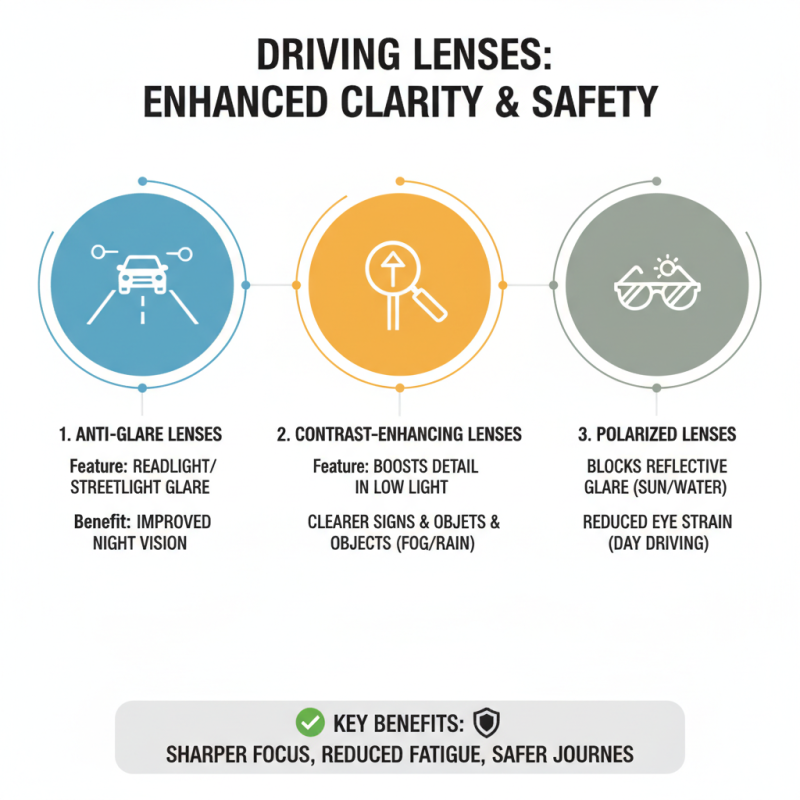
Driving lenses are specifically designed to enhance visual clarity while on the road. They come in various types, each with unique features catering to different driving conditions. For instance, some lenses reduce glare from headlights or streetlights, improving night driving. Others enhance contrast, making it easier to see road signs and objects in dim light. This is crucial for safe driving.
Many people overlook the importance of proper driving lenses. Poor vision can lead to accidents. Always consult an eye care professional for personalized recommendations. Your vision needs may vary, depending on age and eyesight issues.
Tip: Consider transitional lenses if you alternate between indoor and outdoor driving. They adapt to changing light conditions. Additionally, anti-reflective coatings can reduce glare and improve clarity.
When selecting driving lenses, think about the environment you drive in most. Foggy weather requires different lens features compared to bright, sunny days. It's essential to evaluate your driving habits and ensure your lenses meet those specific needs.
The Role of Lens Materials in Enhancing Optical Performance
The choice of lens materials significantly impacts optical performance. Advanced materials like polycarbonate and high-index plastics provide superior clarity and durability. According to the Optical Society, these materials can reduce the lens thickness, enhancing comfort and aesthetics for the wearer. Enhanced refractive indices mean that lenses can be thinner without compromising vision quality.
Moreover, lens coatings contribute to performance. Anti-reflective coatings minimize glare, which is essential for night driving. A survey by the Vision Council reported that up to 70% of lens wearers experience noticeable glare. These coatings also protect against scratches, improving longevity. However, not all coatings provide the same level of protection. Some may wear off faster than others, leading to reflection problems.
Considering all these factors, one must reflect on the implications of choosing the right lens material and coatings. Money spent on high-end materials doesn’t guarantee satisfaction. Regular maintenance and proper usage are crucial for optimal performance. Therefore, understanding the role of lens materials and coatings is essential in making informed decisions for better vision.
How Anti-Reflective Coatings Improve Night Driving Experience
Anti-reflective coatings play a significant role in enhancing night driving. They reduce glare from oncoming headlights, which can be blinding. This clarity allows drivers to see better and react more quickly. The benefits extend to overall night visibility, making dark roads appear brighter.
These coatings work by minimizing reflections on the lens surface. When light hits the lenses, some of it gets reflected away, which can hinder a driver’s vision. With an anti-reflective coating, drivers enjoy clearer views. This not only boosts comfort but also confidence on dimly lit streets. It's frustrating when glare disrupts your focus.
While helpful, not all coatings are equal. Some may wear down faster than others. It’s vital to maintain lenses properly to get the most benefit. Even with high-quality coatings, poor lighting conditions can still pose challenges. Reflection management is key, but so is being aware of your surroundings.
Balancing these elements makes for a safer, more enjoyable driving experience at night.
Tips for Choosing the Right Driving Lenses for Your Needs
Choosing the right driving lenses is essential for enhancing your vision on the road. Many drivers overlook this crucial aspect. According to a report by the American Optometric Association, nearly 50% of drivers experience vision-related issues while driving. This underlines the importance of selecting lenses that cater to specific driving needs.
Consider lenses with anti-reflective coatings. These can reduce glare from headlights and streetlights, significantly improving night-time visibility. Research shows that such coatings can improve contrast by up to 30%. Additionally, polarized lenses can cut down on glare from wet roads, making it easier to spot hazards. Adjusting to different light conditions can be challenging, and not all lenses can perform well in transitional light.
Think about lens materials, too. Polycarbonate lenses are lightweight and impact-resistant. They are suitable for active drivers, offering durability without compromising comfort. However, some may find they scratch more easily. It’s vital to weigh the benefits against potential drawbacks in terms of cost and maintenance. A thorough evaluation of your driving habits can guide you toward the best choice for enhanced safety and vision.
What is Driving Lenses and How Do They Enhance Your Vision?
| Feature |
Description |
Benefits |
| Anti-Glare Coating |
Reduces reflections from headlights and sunlight |
Improves night vision and reduces eye strain |
| Polarized Lenses |
Blocks horizontal light waves |
Reduces glare from surfaces like roads and water |
| Photochromic Lenses |
Darken in sunlight and clear indoors |
Offers convenience and protects against UV rays |
| High Definition Vision |
Enhanced clarity and contrast in vision |
Improves perception of road signs and obstacles |
| Scratch Resistance |
Coating that protects against scratches |
Increases durability and longevity of lenses |