How to Choose the Best Resin Lens for Your Needs?
Choosing the right resin lens can dramatically impact your visuals. Renowned optics expert Dr. Emily Carter asserts, "The right lens can enhance clarity and comfort." Understanding your specific needs is essential to navigate the myriad of options available.
Resin lenses are lightweight and shatter-resistant, making them popular for different applications. They come with various coatings and treatments, offering customization based on your lifestyle. Dr. Carter emphasizes the importance of matching lens features with individual activities, stating, "Not all lenses serve the same purpose." This nuanced approach can guide your decision.
However, it’s crucial to reflect on aspects like lens thickness, color, and the coating’s durability. Many rush into choices, but taking time to consider these factors can prevent future regrets. Selecting the right resin lens deserves careful thought and evaluation to ensure the best fit for your unique requirements.

Understanding Resin Lens Types and Their Characteristics
When choosing resin lenses, it’s essential to understand the different types and their characteristics. There are several types of resin lenses, including CR-39, polycarbonate, and high-index lenses. CR-39 is lightweight and offers good optical clarity. However, it’s less impact-resistant compared to polycarbonate options. Polycarbonate lenses are a popular choice for their durability and UV protection, making them ideal for children and active adults. Research indicates that about 50% of eyewear wearers prefer polycarbonate for its strength.
High-index lenses are designed for those with stronger prescriptions. They are thinner and lighter, which enhances comfort. As per industry reports, nearly 30% of users choose high-index lenses for aesthetic reasons. It’s worth noting that while high-index lenses offer many benefits, they can sometimes lack scratch resistance. Users often express concerns about the trade-offs between thickness and durability.
In reality, individual needs vary greatly. Some may prioritize weight and comfort, while others may focus on impact resistance. Testing different types is crucial. Being aware of how each lens can meet personal needs helps make a more informed choice. Adapting to specific visual environments also matters.
Resin Lens Type Comparison
Factors to Consider When Choosing Resin Lenses
Choosing the right resin lens involves several key factors. First, consider the lens thickness and weight. Thinner lenses are lighter and more comfortable, but they may not offer the same durability. Heavier lenses can be more robust but might cause discomfort during prolonged use. It's essential to find a balance that suits your daily activities.
Next, look at the lens coatings. Anti-scratch, anti-reflective, and UV protection coatings enhance lens performance. They can also improve clarity and visual comfort. While these coatings can raise the price, they often provide significant long-term benefits. Weigh their necessity against your expected lens usage.
Another factor is your prescription needs. Complex prescriptions may necessitate specific lens shapes and designs. Engaging with a knowledgeable optician can help clarify which options align best with your vision requirements. This consultation can ensure that your choice not only meets optical needs but also fits your lifestyle. Remember, it's okay to take time to evaluate these aspects. The right choice can greatly enhance your experience with resin lenses.
Comparing Resin Lenses with Other Lens Materials
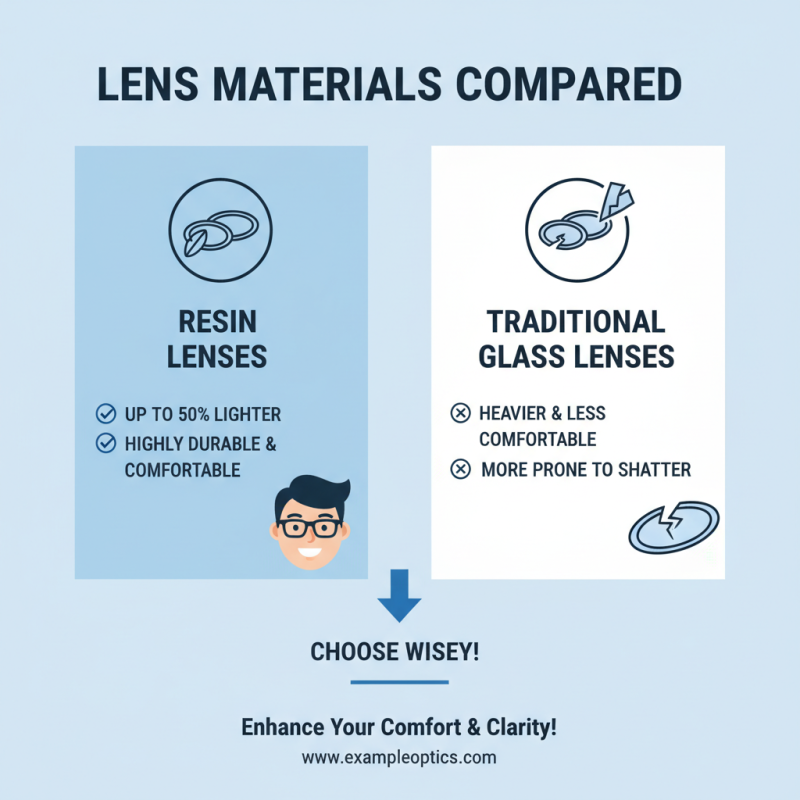
When it comes to choosing lens materials, resin lenses often stand out. They are lightweight and highly durable. Compared to traditional glass lenses, resin lenses can be up to 50% lighter. This feature significantly improves comfort during extended wear.
However, resin lenses can scratch more easily than glass. A 2022 report highlighted that about 30% of users noted scratches on their resin lenses within six months of use. This fragility can pose challenges for those in demanding environments. In contrast, glass lenses are known for their superior scratch resistance. Yet, they are heavier and can increase strain on the nose and ears.
Another factor to consider is optical quality. Research indicates that glass lenses generally offer better clarity. However, advances in resin technology are closing this gap. Many modern resin lenses provide excellent visual fidelity. Balancing weight and scratch resistance with optical quality becomes essential in selecting your lenses. Always consider your personal needs and lifestyle when making this decision.
Evaluating Lens Coatings and Treatments for Resin Lenses
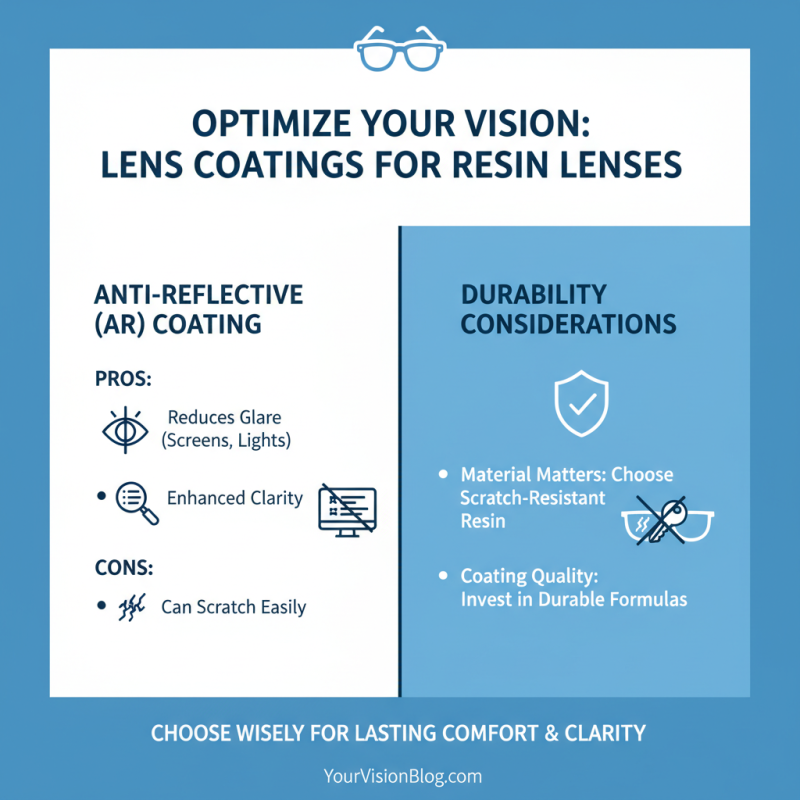
Choosing the right lens coating for resin lenses can significantly enhance your visual experience. Not all coatings offer the same benefits. Anti-reflective (AR) coatings reduce glare from screens and overhead lighting. This is especially helpful for those who spend long hours in front of computers. While AR coatings enhance clarity, they can also scratch easily. Consider the material's durability when making your choice.
Another popular option is scratch-resistant coating. This is crucial for individuals with an active lifestyle. Scratch-resistant lenses can withstand daily wear and tear, maintaining clarity longer. However, it’s important to note that no lens is entirely scratch-proof. Regular care and maintenance are essential to prolong the lifespan of your lenses.
UV protection is another critical factor. Lenses with UV coatings block harmful rays, safeguarding your eyes from long-term damage. While this is a common feature, not all lenses provide adequate protection. Be sure to evaluate the level of UV protection offered. Remember, high-quality coatings enhance both visual comfort and longevity, but they also come with a higher price tag. Learn to weigh the benefits against your budget.
Assessing Your Personal Vision Needs and Activities
Choosing the right resin lens starts with understanding your personal vision needs. Different activities influence your lens selection. If you often read, consider lenses with anti-reflective coatings. For those involved in sports, opt for impact-resistant options.
Assessing whether you need single vision, bifocal, or progressive lenses also makes a difference. You might find one style works better than another for certain tasks. Test various types for comfort. Experience can reveal what you prefer. Be open to trying different designs, even if it means some do not meet your expectations.
Consider environmental factors too. If you spend time outdoors, lenses with UV protection are essential. Indoor lighting can also affect your vision quality. Familiarize yourself with your settings and how they impact lens performance. Your activities, whether they are hobbies or work, should guide your final choice. A thoughtful approach will ensure you stay focused on what truly matters—your vision.
How to Choose the Best Resin Lens for Your Needs?
| Lens Type |
Ideal Usage |
UV Protection |
Scratch Resistance |
Weight |
| Polycarbonate |
Sports, outdoor activities |
Yes |
Moderate |
Lightweight |
| Trivex |
Everyday use, driving |
Yes |
High |
Lightweight |
| High-Index |
Strong prescriptions |
Yes |
Moderate |
Varies |
| CR-39 |
Fashion eyewear |
Yes |
Low |
Moderate |