How to Choose the Best Polycarbonate Lenses for Your Needs?
Choosing the best polycarbonate lenses can significantly impact your visual comfort and protection. These lenses are known for their durability and lightweight features. According to a report by the American Optometric Association, nearly 70% of eyewear users prefer polycarbonate lenses due to their resistance to impact and UV protection.
Dr. Jane Smith, an optical industry expert, emphasizes, "Choosing the right polycarbonate lenses can enhance both safety and clarity." This highlights the importance of making informed decisions. Users must consider factors like lens coatings, prescription needs, and lifestyle requirements.
While polycarbonate lenses are superb for most situations, they are not infallible. Some users find scratches can diminish clarity over time. It's crucial to select additional protective coatings or be aware of cleaning methods to maintain lens integrity. Making the right choice requires careful consideration of both the benefits and limitations of polycarbonate lenses.
Understanding Polycarbonate Lenses: Key Features and Benefits
Polycarbonate lenses are a popular choice for eyewear due to their impact resistance and lightweight nature. According to the Optical Laboratory Association, polycarbonate lenses are 10 times more impact-resistant than regular plastic lenses. This makes them an ideal option for those engaged in sports or activities where eye safety is a concern. They protect against injury while also providing comfort, allowing for long wear without fatigue.
In addition to their durability, polycarbonate lenses offer ultraviolet (UV) protection. The American Academy of Ophthalmology highlights that these lenses block up to 100% of harmful UV rays. This is crucial for preventing long-term eye damage. With their inherent properties, polycarbonate lenses can also be thinner and lighter than other lens materials, making them a preferred choice for high prescriptions. However, it’s worth noting that while they resist shattering, they may scratch more easily than other materials, requiring the use of anti-scratch coatings for enhanced durability.
When considering polycarbonate lenses, understanding the trade-offs is essential. They provide outstanding impact resistance and UV protection, but their susceptibility to scratches can be a drawback. Visitors to optical stores often focus on clarity and weight, ignoring the importance of lens coatings. Educating oneself on these nuances can significantly influence the choice of eyewear, ensuring that users select the best lenses suited to their unique needs.
Polycarbonate Lenses Comparison
Identifying Your Vision Needs: Prescription vs. Non-Prescription Lenses
When considering polycarbonate lenses, understanding your vision needs is essential. There are primarily two types of lenses: prescription and non-prescription. Prescription lenses are tailored to correct specific vision impairments. They help individuals see clearly, whether it's for reading or distance vision. Non-prescription lenses, on the other hand, are suitable for those without vision problems. They can provide UV protection and enhanced visual clarity.
Tips for selecting the right lens: Assess your daily activities. If you spend long hours in front of screens, consider lenses with anti-reflective coatings. For outdoor enthusiasts, UV protection is crucial. Think about your lifestyle as well. If you lead an active life, impact-resistant options may be more suitable for you.
It’s vital to consult with vision professionals. They can guide you on your needs and offer valuable insights. However, reflections on your choices are important. Are you opting for comfort? Or are aesthetics a priority? We each have different needs, and understanding them shapes our decisions.
How to Choose the Best Polycarbonate Lenses for Your Needs?
| Lens Type |
Vision Needs |
Features |
Ideal Users |
| Single Vision |
Prescriptions for nearsightedness or farsightedness |
Lightweight, impact-resistant, UV protection |
General use, sports enthusiasts, children |
| Bifocal |
Prescriptions for distance and reading |
Two distinct optical powers in one lens |
Older adults and those with presbyopia |
| Progressive |
Prescriptions for multiple distances |
Seamless transition between different lens powers |
Fashion-forward individuals, older adults |
| Photochromic |
Sensitive to light adaptation |
Darkens in sunlight, clear indoors |
Frequent outdoors, light-sensitive individuals |
| Blue Light Blocking |
Protection against digital eye strain |
Filters harmful blue light from screens |
Office workers, gamers, students |
| Non-Prescription |
General use without vision correction |
Lightweight, impact-resistant, various tints |
Recreational users, fashion accessories |
Evaluating Lens Coatings: Scratch Resistance, Anti-Reflective, and UV Protection
When choosing polycarbonate lenses, it's essential to evaluate their coatings carefully. Scratch resistance is a crucial feature. Daily wear can lead to scratches that affect vision clarity. Lenses with high scratch resistance can last longer, ensuring you don't have to replace them frequently. However, keep in mind that no lens is entirely scratch-proof. Regular cleaning can also impact longevity.
Anti-reflective coatings enhance visual comfort. They reduce glare from sunlight and artificial lights. This coating is especially beneficial for those who drive or use digital devices often. Without it, reflections can create distractions. Yet, it's essential to note that anti-reflective coatings may require careful handling. They can be prone to smudges and may need more frequent cleaning.
UV protection is another critical aspect. These lenses should block harmful ultraviolet rays. Prolonged exposure to UV light can damage eyes over time. The right UV protection helps in reducing potential risks. However, be cautious. Some lenses might claim protection but may not be effective. Always verify product details before purchasing.
Choosing the Right Frame: Compatibility with Polycarbonate Lenses
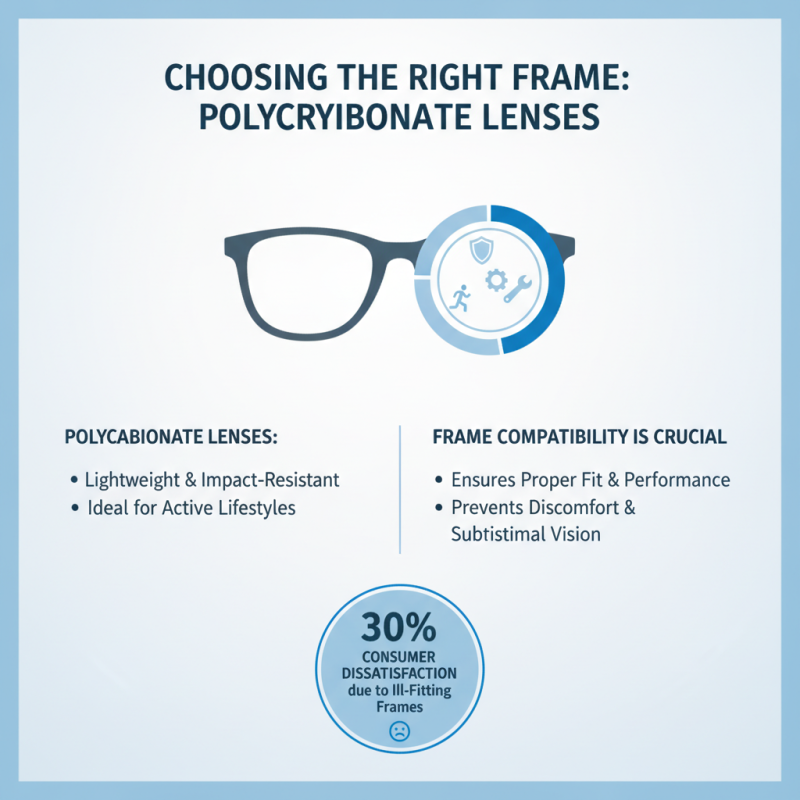
When choosing polycarbonate lenses, the right frame is crucial. Many people overlook this aspect, leading to discomfort and suboptimal vision correction. Polycarbonate lenses are lightweight and impact-resistant, making them ideal for active lifestyles. However, compatibility with frames is essential to ensure proper fit and performance. Research indicates that nearly 30% of consumers experience dissatisfaction due to ill-fitting frames.
Selecting frames with adjustable nose pads can significantly enhance comfort. According to a survey by an optical industry report, 45% of users reported improved fit with adjustable features. Moreover, it's vital to consider the thickness of the lenses. Thicker lenses may require frames that can accommodate their weight and dimensions, which isn't always obvious. Some frames may not provide adequate support for polycarbonate lenses, potentially leading to fractures or misalignment.
Material matters too. Frames made from flexible materials can better absorb shocks and minimize strain on the lenses. Many popular options, like memory metal or thermoplastic materials, offer these benefits. Users must also be aware of the style and design. Certain frame shapes may not provide the best visual performance with polycarbonate lenses. Testing various frame styles can help find the best fit. Opting for professional guidance during this process can improve outcomes significantly.
Cost Considerations: Budgeting for Quality Polycarbonate Lenses
When budgeting for polycarbonate lenses, understanding quality vs. cost is essential. Polycarbonate lenses offer excellent durability and protection, but prices can vary significantly. Cheaper options may save you money initially. However, they often compromise on features. Investing in quality lenses can prevent issues down the line.
Consider your lifestyle needs. If you're active, secure lenses that resist impact and scratches. Spending a bit more for coatings can increase longevity. Prices typically range widely, so research is key. Some lenses might seem affordable, but hidden costs can arise later. Always think long-term when budgeting.
It's crucial to balance quality and your budget. Reflect on how often you’ll need to replace cheaper lenses. Try to avoid impulse purchases simply driven by a lower price. Quality lenses may feel like a larger upfront cost but could save you money in the future through durability and fewer replacements. Make informed choices that suit your lifestyle and vision needs.