Best Prescription Lenses in 2026 What Are Your Options?
In 2026, the world of Prescription Lenses is evolving rapidly. According to a recent industry report, the global eyewear market is projected to reach $200 billion by 2027. Understanding your options is essential.
Advancements in lens technology are transforming the user experience. This includes progressive lenses, blue light filtering, and photochromic options. However, many consumers struggle to navigate these choices. Studies show that nearly 30% of lens wearers are unaware of the full potential of modern Prescription Lenses.
Moreover, the impact of lifestyle on lens selection cannot be overlooked. With increased screen time, more people are now looking for lenses that protect against digital strain. These lenses are not just a trend; they are becoming a necessity. Yet, many still rely on outdated prescriptions, which can lead to discomfort. Reflecting on this, it's crucial to stay informed and reassess your options regularly.
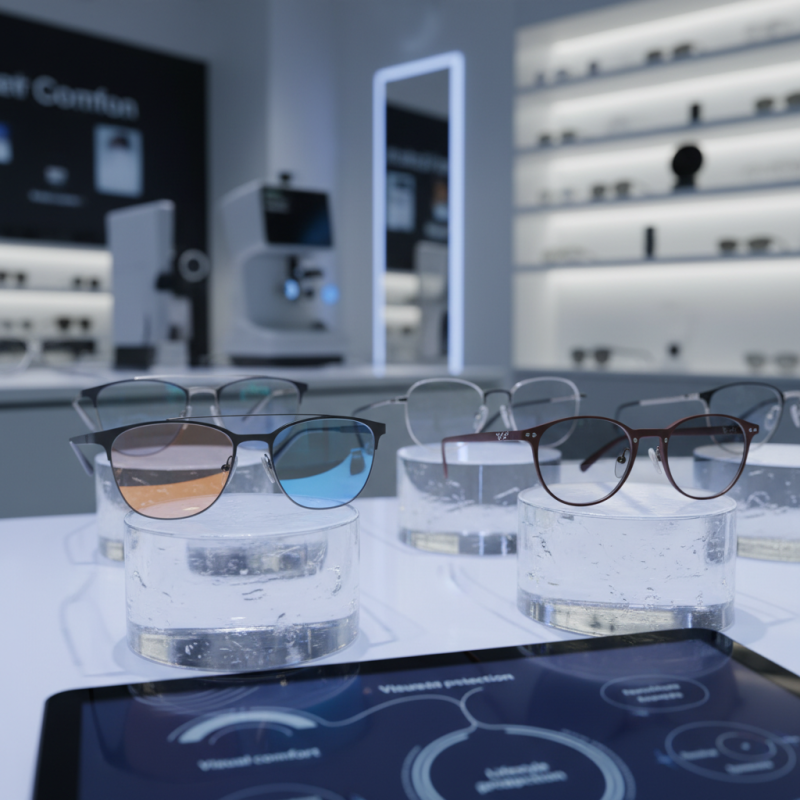
Best Prescription Lens Types for 2026: A Comprehensive Guide
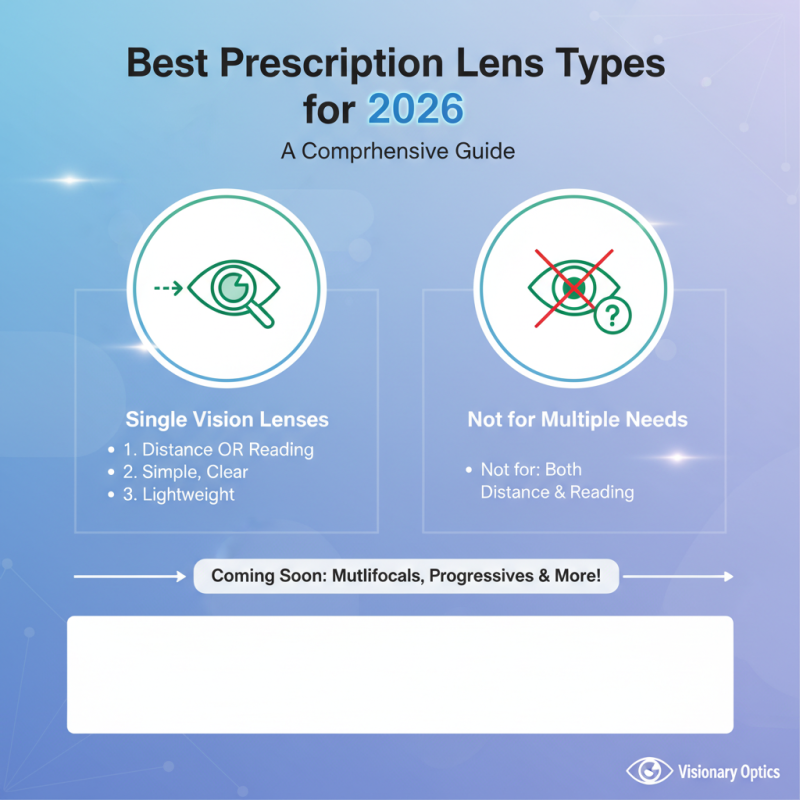
In 2026, choosing the right prescription lenses will be crucial for your vision needs. Different lens types cater to unique lifestyles and preferences. Single vision lenses are ideal for those who need only distance or reading correction. They provide a straightforward solution and are often lightweight. However, they might not be the best fit for individuals with multiple vision requirements.
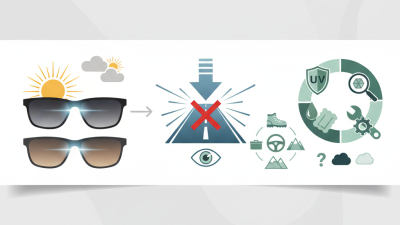
Progressive lenses remain a popular choice for those requiring correction at varying distances. They offer seamless transitions between different focal points. Yet, adapting to these lenses can be challenging for some. This can lead to discomfort or distortion if not fitted correctly. Therefore, it is essential to ensure a proper assessment before making a decision. Additionally, photochromic lenses, which adjust to light changes, can be a great option if you often move between indoor and outdoor settings. But they might not darken sufficiently in a car.
Considering lens materials is just as important. High-index lenses are thinner and lighter, which is beneficial for strong prescriptions. However, they can be more expensive. Reflect on what matters most to you: cost, functionality, or aesthetics. Each choice has its trade-offs. Take the time to weigh these aspects before settling on your ideal lenses.
Key Features to Consider When Choosing Prescription Lenses
When selecting prescription lenses, understanding key features is crucial. One of the most important aspects is lens material. Options vary from polycarbonate to high-index plastics. Polycarbonate lenses are lightweight and impact-resistant, making them ideal for an active lifestyle. High-index lenses, on the other hand, are thinner and lighter, which can enhance comfort for stronger prescriptions.
Another feature to consider is lens coatings. Anti-reflective coatings reduce glare, improving vision clarity. Scratch-resistant coatings protect the lens surface, increasing durability. Blue light filtering is increasingly popular, especially among digital device users. However, some users find that it can alter color perception. This variance may require adjustments or a period of getting used to.
It's also vital to evaluate lens types. Progressive lenses offer a seamless transition between different viewing distances. Bifocal lenses provide distinct zones for reading and distance. Each lens type has its advantages and shortcomings. Users may take time to adapt to progressive lenses; some report difficulty in peripheral vision. Choosing the best prescription lenses involves personal preferences and specific needs, making it a uniquely individual process.
Innovative Lens Technologies Emerging in 2026
As we step into 2026, innovative lens technologies are reshaping how we view the world. Advances in digital lens designs cater to individual needs. Intelligent lens technologies now incorporate adaptive features, adjusting to varying light conditions automatically. Studies show that over 65% of users prefer these smart lenses for their convenience and clarity.
Tips: Consider your lifestyle when choosing lenses. Digital environments demand sharper vision. Choose lenses that reduce blue light exposure, especially if you spend hours in front of screens.
Another exciting development is the rise of eco-friendly lens materials. Reports indicate that nearly 30% of consumers prioritize sustainable options when shopping for eyewear. This shift is crucial for the planet, as traditional lens materials contribute significantly to pollution.
It’s essential to reflect on these choices. While innovative features impress, they may come with higher costs. Assess whether the benefits outweigh the investment for your needs. Choose wisely, balancing quality with practicality.
Comparative Analysis of Top Prescription Lens Brands
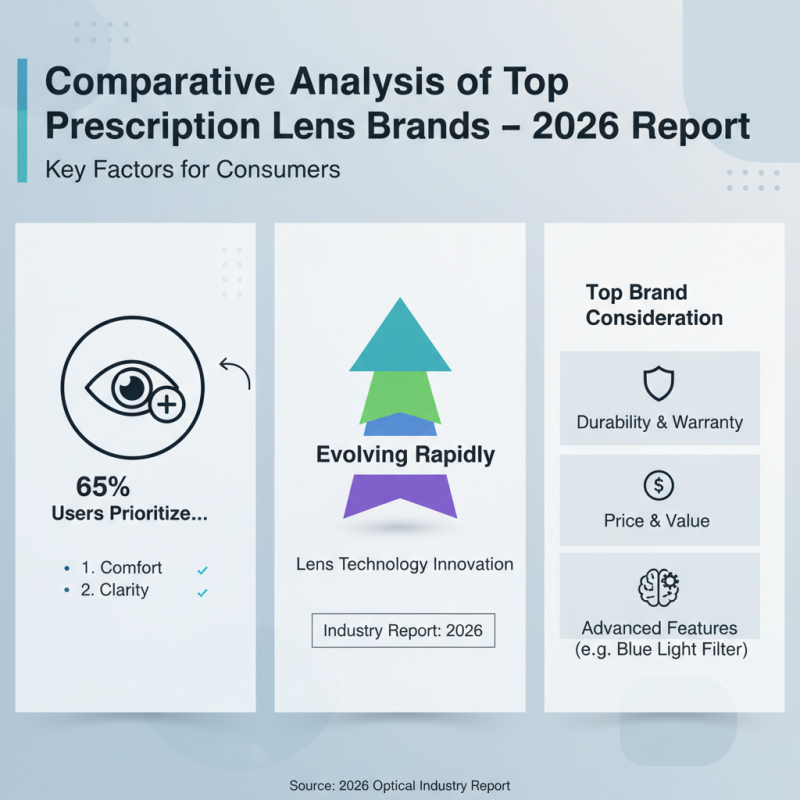
The world of prescription lenses is evolving rapidly. In 2026, consumers face an array of options from various brands. A comparative analysis reveals several key factors to consider. According to a recent industry report, 65% of users prioritize comfort and clarity in their lenses.
Lens materials play a significant role in this comfort. Polycarbonate is often highlighted for its lightweight nature and impact resistance. Yet, some users still find it lacks the optical clarity of higher-end materials. Additionally, many lenses now incorporate blue light filtering technology. Reports indicate that nearly 70% of users report less eye strain when using these specialized lenses. However, the effectiveness of these coatings can vary drastically between brands.
Another vital aspect is customization. Some brands offer personalized lens options tailored to individual prescriptions and lifestyle needs. According to surveys, 58% of wearers appreciate this level of personalization, enhancing their overall experience. However, the cost factor can be a barrier. Many consumers feel that the benefits do not always justify the price. This discrepancy raises questions about the balance between innovation and accessibility in the lens market.
Pricing and Availability of Prescription Lenses in 2026
As we look ahead to 2026, the landscape of prescription lenses promises to evolve significantly. Pricing remains a crucial concern for consumers. Reports indicate that average costs for a pair of prescription lenses have risen by about 8% annually in recent years. In 2026, prices may hover between $200 and $400, depending on the lens type and features. Specialized lenses, like progressive or high-index options, could reach higher price points.
Availability is another critical factor. Innovations in lens materials and coatings are becoming more common. Data shows that over 60% of consumers value anti-reflective and blue light-blocking coatings. However, these features often come with additional costs. Many users may find it overwhelming to choose from the range of options available. The increase in telehealth services also affects distribution. Many consumers prefer online purchases, but this can lead to mismatched prescriptions if not verified adequately.
The prescription lens market is complex. While more choices emerge, consumers must navigate pricing variations and features. Ensuring correct prescriptions and optimizing lens selections can become a cumbersome task for many. The industry must address these challenges to improve customer experience in the future.
Best Prescription Lenses in 2026: Options, Pricing, and Availability
| Type of Lens |
Material |
Price Range (USD) |
Availability |
| Single Vision |
Polycarbonate |
$100 - $250 |
Widely Available |
| Bifocal |
High Index |
$150 - $300 |
Commonly Available |
| Progressive |
Trivex |
$200 - $500 |
Specific Retailers |
| Blue Light Blocking |
Polycarbonate |
$120 - $280 |
Growing Popularity |
| Photochromic |
Glass/Plastic |
$150 - $450 |
Available at Most Opticians |