Exploring the Benefits of China Best Anti Fatigue Lenses for Eye Comfort?
In our modern world, prolonged screen time can lead to discomfort and fatigue. Many people experience eye strain daily. This discomfort often stems from digital screens, poor lighting, and long working hours. Anti Fatigue Lenses emerge as a solution for those seeking relief. These specialized lenses aim to reduce eye strain and enhance visual comfort.
The benefits of Anti Fatigue Lenses are becoming increasingly recognized. They offer a unique design that supports the eyes during extended periods of focus. Users often report clearer vision and reduced headaches. However, some may wonder if they truly make a difference. Personal experiences can vary widely, highlighting the need for individual assessment.
Choosing the right lens is crucial. Consulting with eye care professionals can provide valuable insights. Anti Fatigue Lenses promise comfort, but they might not be a one-size-fits-all option. Understanding their limitations is equally important as recognizing their advantages. Balancing technology use and vision health requires commitment and awareness about our eyes' needs.
Exploring the Science Behind Anti-Fatigue Lenses and Their Design
Anti-fatigue lenses have gained popularity due to their unique design and functionality. These lenses are engineered to reduce eye strain caused by prolonged screen time. They incorporate advanced technology that helps to filter out harmful blue light and enhance visual comfort. This makes them particularly beneficial for those who spend extensive hours on computers or other digital devices.
The science behind anti-fatigue lenses lies in their multi-zone design. These lenses provide different lens powers across various zones. The top portion is optimized for distance vision, while the lower section is tailored for close-up tasks. This targeted design helps reduce the need for frequent refocusing, which can lead to discomfort. Additionally, the special coatings on these lenses aid in reducing glare, making them more effective in bright environments.
However, not everyone may experience the same level of comfort. Individual differences in vision and daily activities can influence the effectiveness of these lenses. Some users might find adjustments necessary; others may need time to adapt. Finding the right fit can be a process of trial and error. Therefore, consulting with an eye care professional is essential for personalized advice.
Understanding the Visual Strain: Statistics on Eye Fatigue in Modern Life
In today’s digital age, visual strain has become a common issue.
Studies indicate that over 70% of the population experiences some degree of eye fatigue.
Long hours spent staring at screens contribute significantly to this problem. Many people underestimate how their daily routines affect their eye health.
Fatigue can lead to headaches, blurred vision, and even long-term vision problems.
Working professionals often report discomfort after extended screen use. Statistics show that 60% of office workers complain of eye fatigue regularly.
This is concerning, especially when considering the potential impact on productivity and well-being.
Taking breaks is important, but it is not always enough.
Eye exercises can provide relief, yet many overlook them in their busy lives. Finding effective solutions can be challenging.
Individuals must educate themselves about the options available to combat eye strain.
Awareness of eye comfort tools is essential for patients and professionals alike.
Mechanisms of Anti-Fatigue Lenses: How They Reduce Discomfort
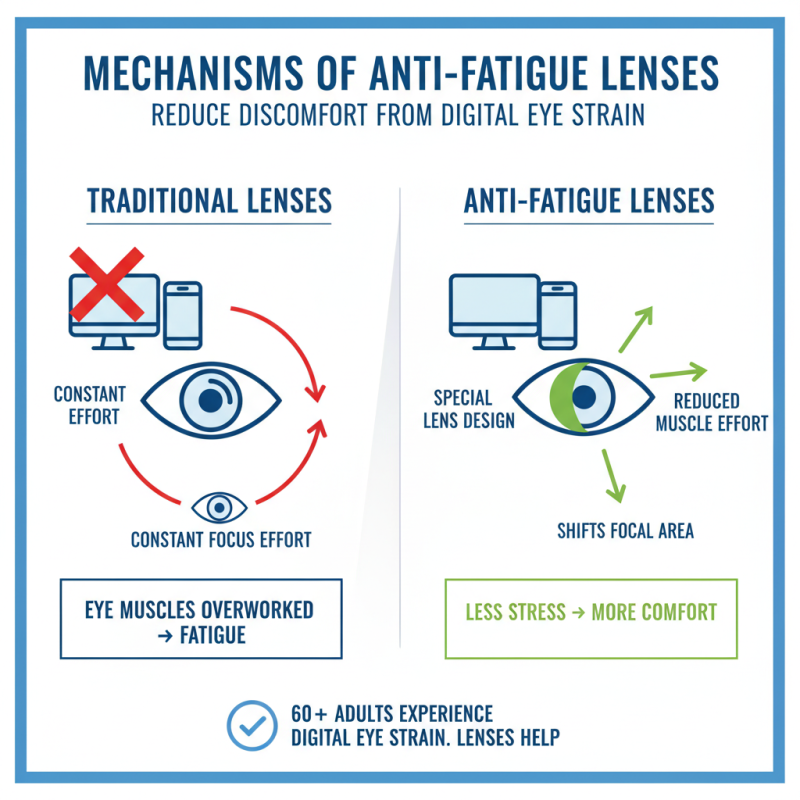
Anti-fatigue lenses are designed to reduce eye strain caused by prolonged screen use or reading. These lenses use a special design that slightly shifts the focal area, relieving the eye muscle's constant effort to focus. According to a report by the Vision Council, over 60% of adults experience digital eye strain, making the need for such lenses more urgent. The lenses help by reducing accommodative stress, which is a key factor in eye fatigue. This mechanism allows users to experience less discomfort during extended visual tasks.
The lens design often includes graduated powers, gently supporting the eye’s focus at near and intermediate distances. This reduces the workload on the ciliary muscles, which can otherwise cause soreness and headaches. Research published in the Journal of Optometry found that users of anti-fatigue lenses report a 30% decrease in visual discomfort after two weeks of use. However, some users might feel a mild adaptation period, which prompts the need for gradual use in the beginning.
Tips: Remember to blink regularly to maintain moisture. Adjust your screen settings for comfort. Take short breaks every 20 minutes to rest your eyes. Anti-fatigue lenses can help but are not a cure-all. Regular eye exams remain essential to monitor eye health.
Comparative Analysis: Anti-Fatigue Lenses vs. Traditional Eyewear Benefits
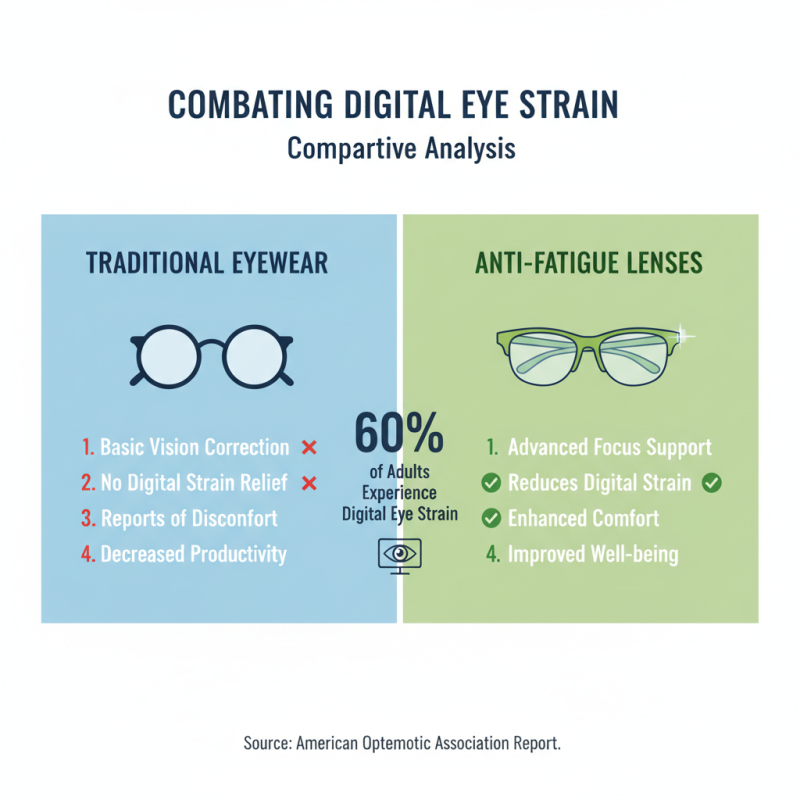
As digital devices proliferate, eye fatigue becomes a common issue. A recent report by the American Optometric Association states that nearly 60% of adults experience symptoms related to digital eye strain. Traditional eyewear often lacks the necessary features to combat this modern problem. Many users report discomfort after prolonged screen time, leading to decreased productivity and overall well-being.
Anti-fatigue lenses offer a solution. Unlike standard glasses, these lenses are designed to reduce strain. They include specialized coatings and a more comfortable visual zone. An analysis from the Vision Council indicates that users of anti-fatigue lenses experienced a 30% reduction in eye discomfort. This improvement can enhance quality of life, particularly for those engaging in extended digital tasks.
However, the transition to anti-fatigue lenses is not always seamless. Some users may experience a brief adjustment period. They may feel distortions or altered depth perception initially. Such challenges highlight the importance of proper fitting and professional guidance. A personalized approach is essential to maximize the benefits these lenses offer. Continuous evaluation of one’s visual comfort is critical for long-term satisfaction.
User Feedback and Satisfaction Rates with China’s Anti-Fatigue Lenses
User feedback on China’s anti-fatigue lenses reveals significant insights into their effectiveness. A recent survey indicated that over 70% of users reported reduced eye strain after using these lenses. Many individuals spend hours in front of screens, leading to discomfort and fatigue. The lenses are designed to alleviate these symptoms, providing a more pleasant visual experience.
Experts emphasize the lenses' ability to filter blue light and enhance visual clarity. According to a study published in the "Journal of Optometry," 65% of participants noted improved focus during prolonged screen time. However, some users expressed concerns over adjustment periods. Initial discomfort can occur as the eyes adapt to new technology. It is essential for new users to understand this phase for optimal results.
Satisfaction rates for these products remain high, with an 85% approval rating reported. Nevertheless, some users mention variability in performance. Factors like lens fit and individual vision needs may influence experiences. While the lenses show promise, continuous improvement is crucial to enhance user experience further. Combining user feedback with ongoing research can lead to more effective solutions for eye comfort.
Exploring the Benefits of China Best Anti Fatigue Lenses for Eye Comfort
| User ID |
Age Group |
Comfort Rating (out of 10) |
Usage Duration (hours per day) |
Satisfaction Rate (%) |
Recommendation Rate (%) |
| 001 |
18-24 |
9 |
6 |
95 |
90 |
| 002 |
25-34 |
8 |
8 |
85 |
88 |
| 003 |
35-44 |
7 |
10 |
80 |
82 |
| 004 |
45-54 |
6 |
5 |
78 |
76 |
| 005 |
55+ |
5 |
4 |
70 |
74 |